


Achieving improved quality and efficiency in appearance inspection through AI imaging inspection technology utilizing Toshiba’s proprietary no-defects learning system
AI imaging inspection technology is leveraged to flexibly and accurately respond to a wide range of needs for customers who have already introduced appearance inspection devices as well as those considering introduction. In addition to Toshiba’s proprietary no-defects learning system, rule-based image processing is utilized to reduce over-detection and to improve inspection accuracy and efficiency. This system is the optimal solution for providing support for early startup when introducing new equipment aimed at automation and for integration with existing equipment.
Customers who wish to improve existing appearance inspection systems
Even if inspection devices have already been introduced, it can be retrofitted or embedded.
It also enhances inspection quality and efficiency.
*The system also supports combined configurations using KEYENCE XG-X and HALCON.
Customers who are considering the automation of visual inspection
The system supports detection of a wide variety of defects and can also be embedded and used within inspection equipment.
Early startup support is also available for customers considering the introduction of new appearance inspection devices.
Main Usages

Examples of Configuration
When appearance inspection devices have already been introduced


When automating visual inspection


Operating requirements:
■ OS: Windows 11
■ CPU: 8-core or higher
■ Memory: 8 GB
■ HDD: 20 GB or more of free space (depending on stored images)
Operating requirements:
■ OS: Windows 11 ■ CPU: 8-core or higher ■ Memory: 8 GB
■ HDD: 20 GB or more of free space (depending on stored images)
Use Cases
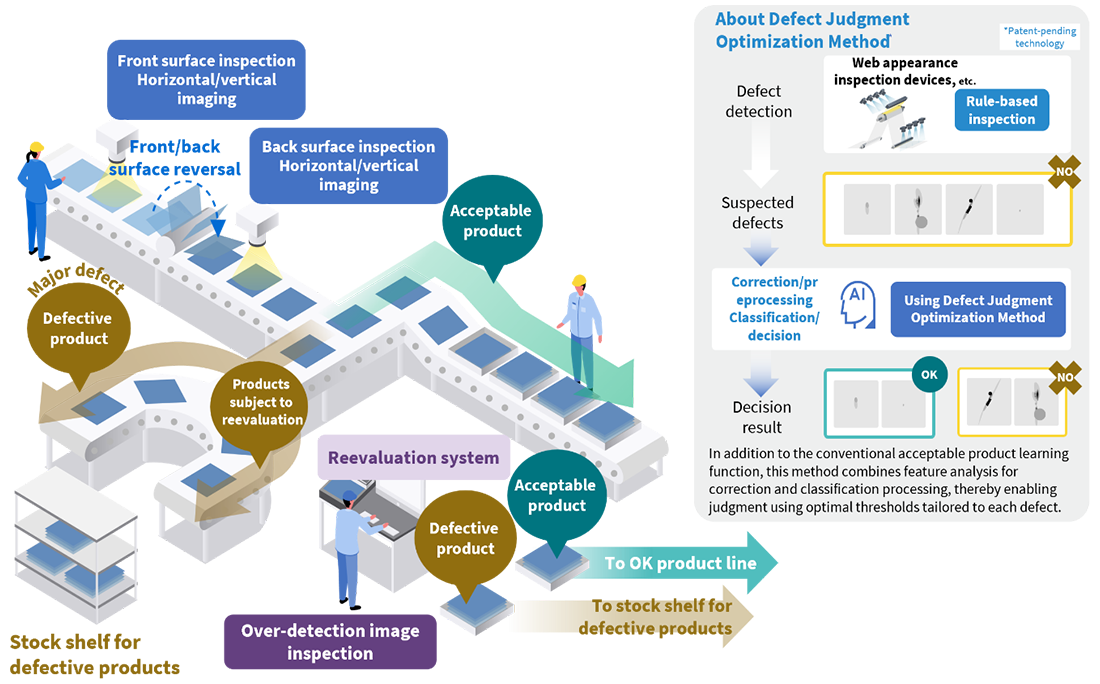
Reduction of reevaluation workload through improved accuracy of sheet and film inspection machines
Highly accurate automation is achieved by adding a mechanism that supports reevaluation using Defect Judgment Optimization Method for workpieces detected as defective in surface inspection.